

Petro-Nelise Sollé – for Play Therapy, Creative Arts Counselling, parent/guardian-and-child-relationships, and Supervision for Play Therapists and across modalities
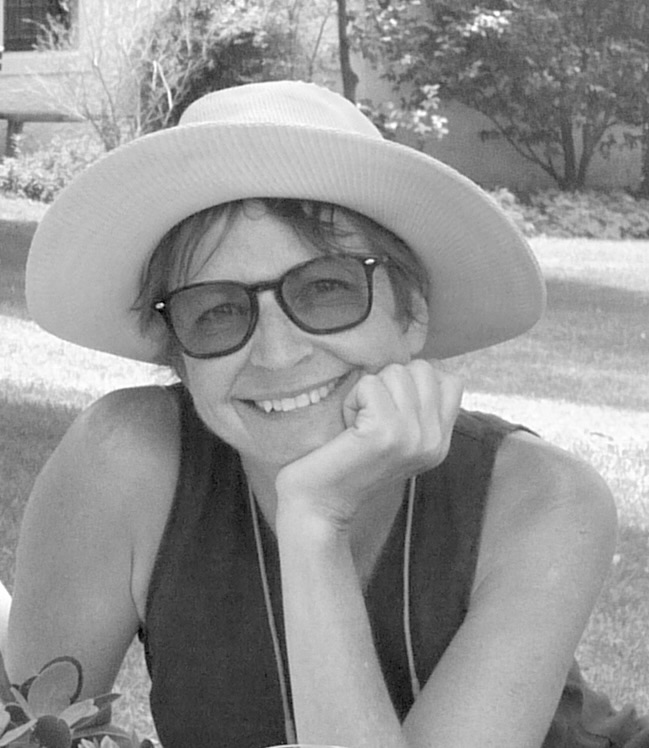 Children’s first language is Play. It is through spontaneous play that we learn and make meaning of life experiences and of growing up. However, when children and young people experience traumatic life events or face developmental challenges, Play Therapy can provide a therapeutic context in which to process their challenges. In Child-Centred Play Therapy (CCPT), this happens at the child’s pace, where the child takes the lead. “Moving at the pace of trust” is a phrase I often use.
Why Play Therapy? Evidence suggests that Play Therapy is indicated for a range of developmental challenges and transitions as well as traumatic life events. My personal belief is that young people living in the 21st century all have stressors that can easily accumulate and lead to overwhelm. Having a safe space in which to bring their worries, fears or fantasies can go a long way to support them to find and build their inner resilience and wisdom. Maintaining a playful atmosphere can bring defences down and build bridges of understanding and insight.
My approach: I believe that behaviour is a message, not a symptom. Being respectfully curious about the message enables me, the Therapist, to facilitate the story that unfolds within the therapeutic relationship. My foundation is in Child-Centred Play Therapy (CCPT). I agree with Gary Landreth, the ‘grandfather’ of Play Therapy: “I see a young person to be understood, not a problem to be solved”. Grounded by the principles and theory of the person-centred approach, I have also brought, with recent training and experiential learning, the outdoors, the more-than-human, into my work —an eco- and climate-aware stance, if you like.
My training: I hold an MA in Play Therapy (Roehampton) and as Full member of the British Association of Play Therapists (BAPT) I adhere to the Ethical Code of Conduct (www.bapt.info). Regular supervision informs my practice. I have also trained in Attachment Theory and Animal-assisted Play Therapy with Tracie Faa-Thomson and Rïse van Fleet. I hold a Postgrad Diploma in eco-psychotherapy (confer.uk), which focused on the emerging adolescent mind. My most recent training is in Creative Supervision across modalities ( Anna Chesner; LCP) which enhanced not only my supervision practice, but my clinical work as well. One thing that is very present at the moment is how the process of “making concrete” (though sand worlds, through role work, etc) can bring the right brain online. Again, how the element of Play makes the processing so much richer, less threatening; how we often hold the wisdom that just needs permission, an outlet, to manifest itself.
How it works: The first consultation – by phone or in person – is free. Once informed consent is given by the people with Parental Responsibility (PR), 1:1 sessions with the child /young person can start. I travel and can work in a school or outdoor setting. If conditions permit, I can also offer sessions at your home. Sessions start at £80 per session and I invoice at the end of the month. For CCPT and Creative Arts Counselling/Therapy I will usually offer 12 sessions to begin with, to give time and space for trust to be established and for themes to emerge. For outdoor sessions or sessions held elsewhere (e.g. schools), the format is adaptable to the needs of the child or young person. Please get in touch with me for more details.
Important details: Consistency is key and sessions will always be at the same time, on the same day each week. I usually work during term time only. Sessions during half term or holidays are by prior arrangement only. Review meetings are scheduled at regular intervals or as and when needed. Honouring the confidentiality of the sessions themselves, I will give feedback and discuss themes and invite open feedback from home/school, depending on the contract and consent. The ending is an important part of the process and needs to be prepared for — with the young person and their therapist, as well as with the people who hold PR. I have found that once we reach this phase of the work, three to four sessions usually give us enough time to count down and process feelings around endings, separation and loss.
Where to find me: I am based in Chalford, and can easily access schools / settings in the Stroud area and surrounds.
I look forward to hearing from you.
Petro
M: 07904 009909


